
Commercial
I make bespoke digital assets for businesses in the North East — photographs, 3D captures, and interactive pieces built for the web.
I'm Lewis Alexander. I shoot the work, and I build the systems it lives in.
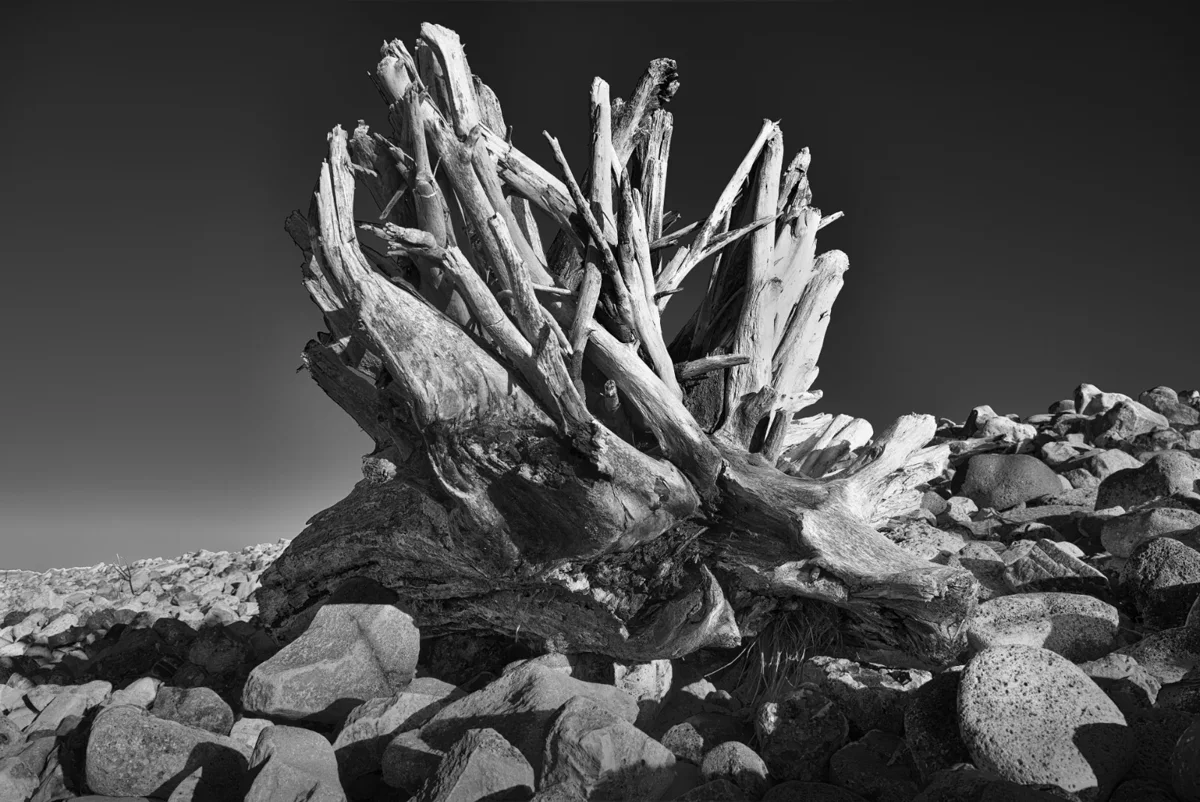
Photography. Editorial, architectural, industrial, heritage and documentary. Monochrome and urban by instinct, though not by rule. Fujifilm X-T5, finished in Affinity.
Product photography. Shot outdoors and in real settings rather than on white seamless — gear, tools, equipment and made objects photographed where they're actually used. It suits Teesside businesses making physical things for physical places.
3D captures. A product or a space captured photographically and rebuilt as something a customer can rotate, inspect and move through in a browser. No plugin, no app. Newer ground for me and I'll say so — but it's where product photography is going, and I'd rather be early.
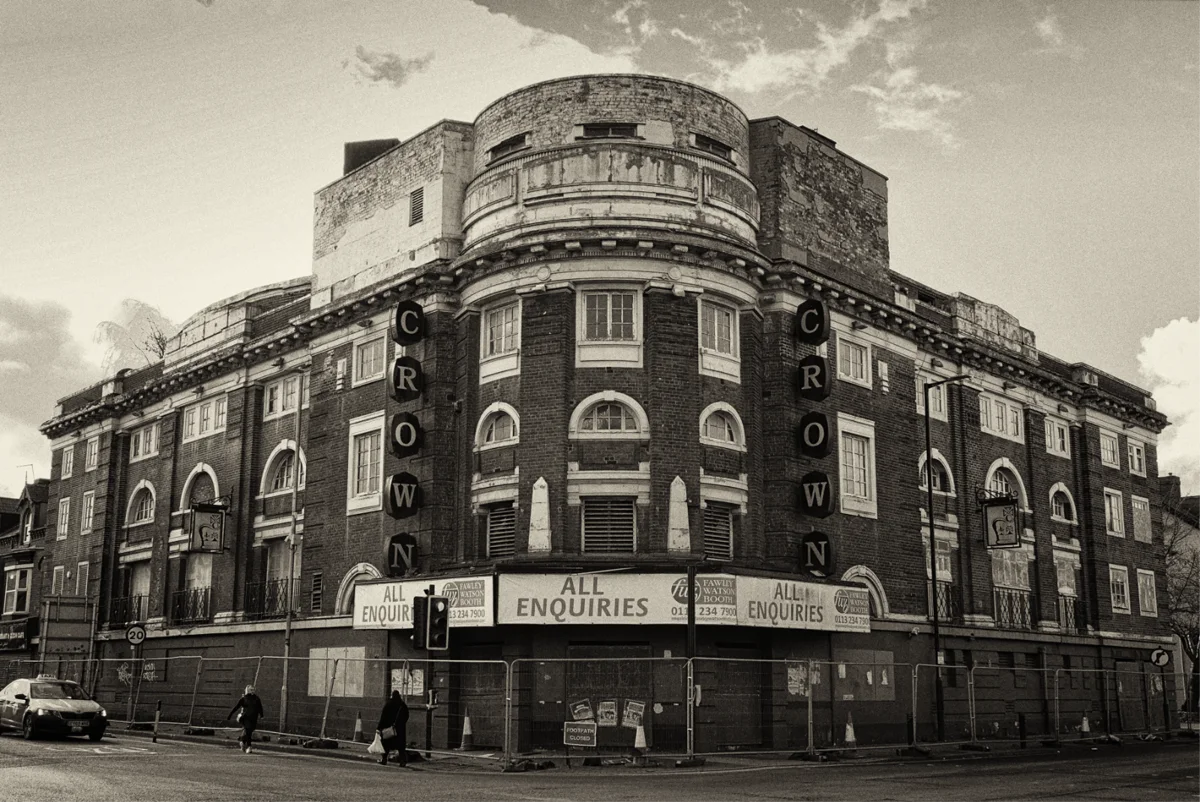
Long-term documentation. A building, a site or a scheme photographed across months. Regeneration and industrial change on Teesside is the subject I keep returning to, and it's work that rewards coming back.
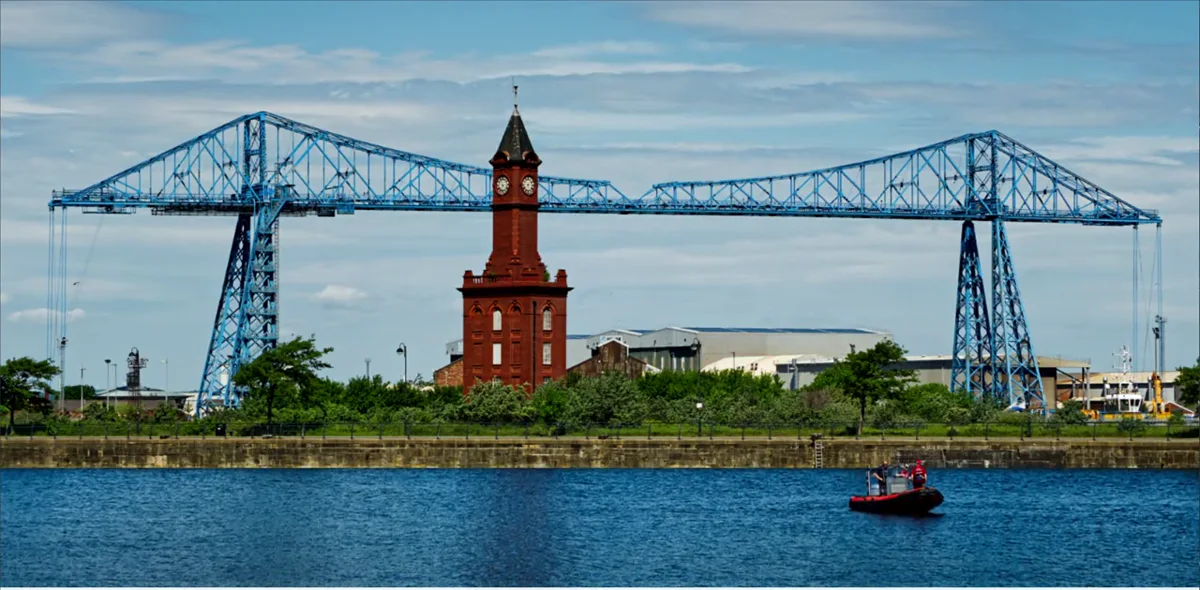
A photograph usually has to do something — sit on a product page, load fast, work on a phone, survive a redesign. I think about that end at the start, because I build the other end too.
My own projects push the same question harder. Smog & Mirrors is an interactive documentary I'm building on twenty years of failed regeneration in Middlesbrough — structured as a cinematic experience rather than a website, and running entirely in a browser. In development, not yet public.
Synaesthesia scores photographs as sound. A photo-walk app puts the images in your hand and walks you round Middlesbrough. Both came out of the same question: what else can a still image do?
I build and run my own web systems by directing AI tools rather than hand-writing code. I'm straight about that, because the honesty is the point: my strength is deciding how a thing gets built, specifying it properly, working out what's actually gone wrong when it breaks, and owning the result. Director and quality controller, not typist.
That means using AI deliberately and within stated limits. It writes code to my specification and everything is tested before it ships. It does not make my photographs. It doesn't invent facts in a documentary about real people and real buildings. It doesn't get the final say on anything.
It runs on written method rather than memory: a planning stage that maps a job before a line is written, one change at a time with verification between, a fixed routine for finding bugs, and a documented record of every project's state.
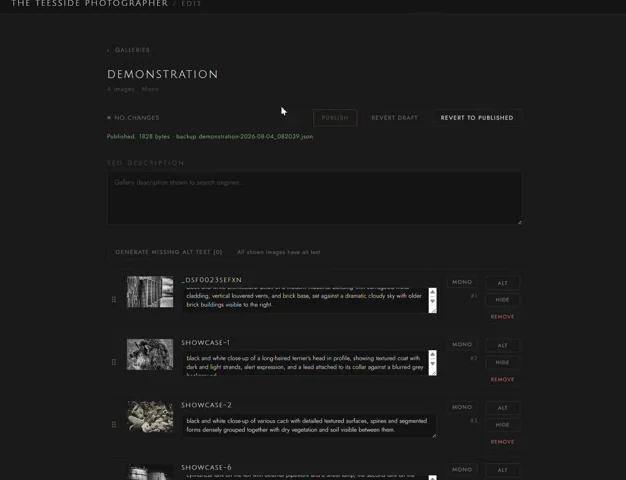
Not a template. I built it and I run it — around 737 images, each individually written up, served from a single gallery template driven by structured data rather than forty hand-maintained pages.
Behind it sits a private control room: edits held as a draft, published only when I deliberately say so, rolled straight back if anything looks wrong. Every change is proved against an automated test suite on a throwaway copy before it goes near the public site. Hosting, security, analytics and search setup are mine too.
If I can run this for myself, I can build it for you.
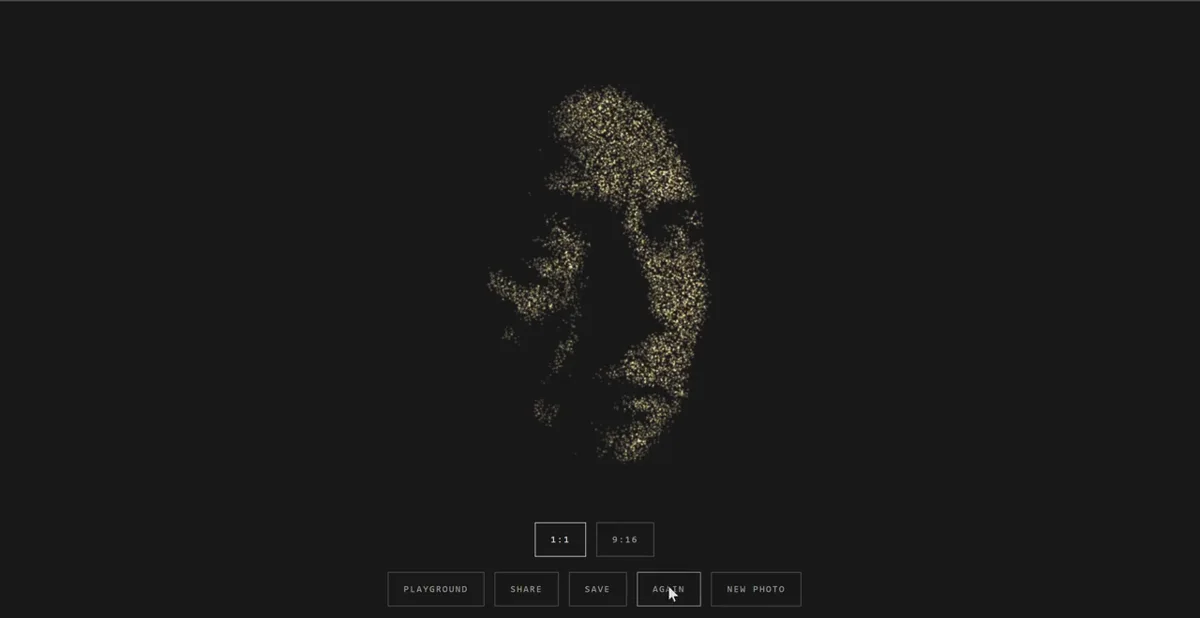
There's a private walkthrough: screen recordings of the admin system in use, a phone app that turns a photograph into a portrait made of thousands of moving particles, and interactive pieces you can click through yourself.
It's password-protected — some of it is working method I'd rather not leave on the open web. Email and I'll send a link and credentials.
contact@theteessidephotographer.com